


Ilya Vetrov
Jul 19, 2025
Among the streets of old Zdolbuniv, at 18 Kostelna Street, stands a unique architectural monument — the Roman Catholic Church of Saints Peter and Paul. Today, it is not only a place of spiritual life for the community, but also an important part of the cultural and historical identity of the city.
At the beginning of the 20th century, the Roman Catholic community of Zdolbuniv, which grew along with the city, persistently sought permission to build its own church. Until then, believers had to travel several dozen kilometers to the nearest church in the village of Taikury. Only after Emperor Nicholas II issued a decree on religious tolerance in 1905 did the community receive official permission to build.
Unlike Orthodox churches, for which the authorities allocated certain funds, Latin Rite believers built the church with their own donations. Following the tradition of Western Christianity, construction began with a chapel with a lantern tower — a small tower in the shape of a lantern, which had a bell. This is how the church welcomed its first believers in 1908.
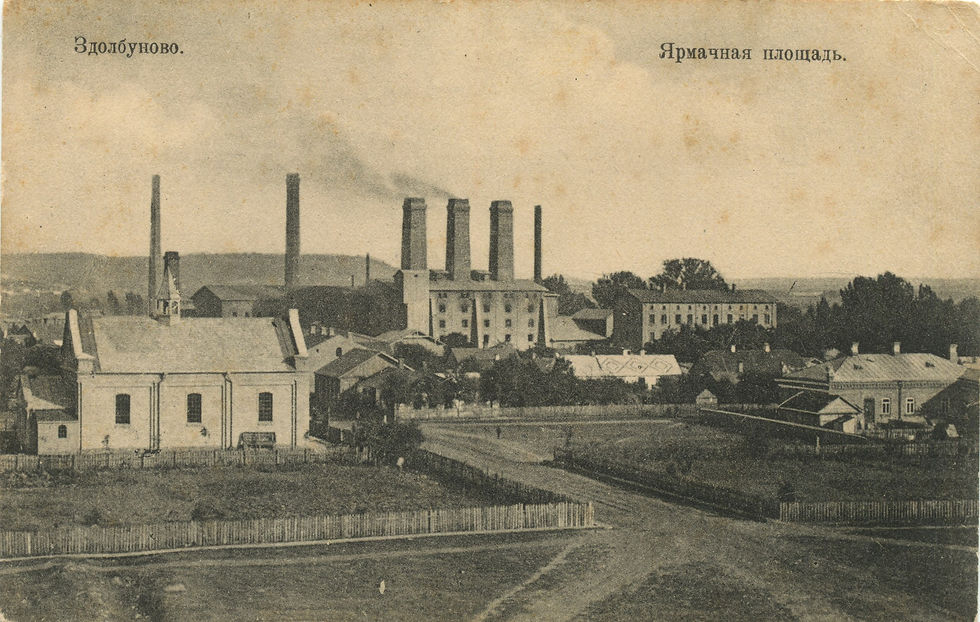
Initially, the church had a modest, almost minimalist architecture. The tall Gothic spire, which now dominates the panorama of the area, was added in the mid-1920s. According to local legend, this was a kind of response to the height of the crosses of the Orthodox Holy Assumption Church located opposite.

At that time, the Roman Catholic community of Zdolbuniv numbered almost 3,700 people. The church became an important center of social life. On the feast of Saints Peter and Paul, hundreds of people gathered here, and the adjacent square was transformed into a fair. Local residents welcomed guests, children played on swings, singing and laughter filled the air — the city was alive.
After 1945, the church lost its ability to operate continuously. In 1960, the Soviet authorities closed the church and turned it into a furniture store. A shopping pavilion was even added to the facade. However, faith did not fade away — the community continued to gather secretly in a private apartment on Prykhodka Street (now Vasyl Zhuk Street), where Father Serafin Kashuba conducted services.
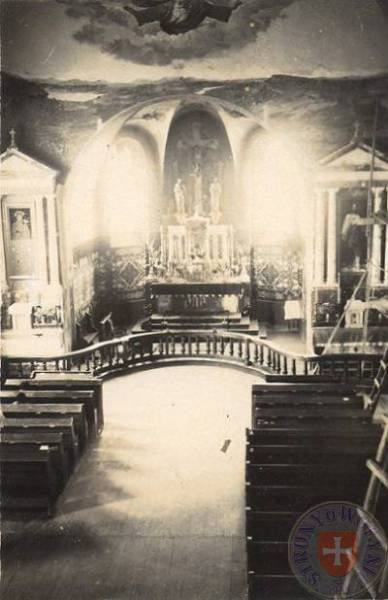
It was only in 1992, after Ukraine gained independence, that the church was returned to the faithful. On December 24 of that year, the first festive service was held in the restored temple.
Today, the Church of Saints Peter and Paul is not just a building. It is a symbol of endurance, unity, and generational continuity. Its history is a story of how a community can defend its right to faith, space, and memory.